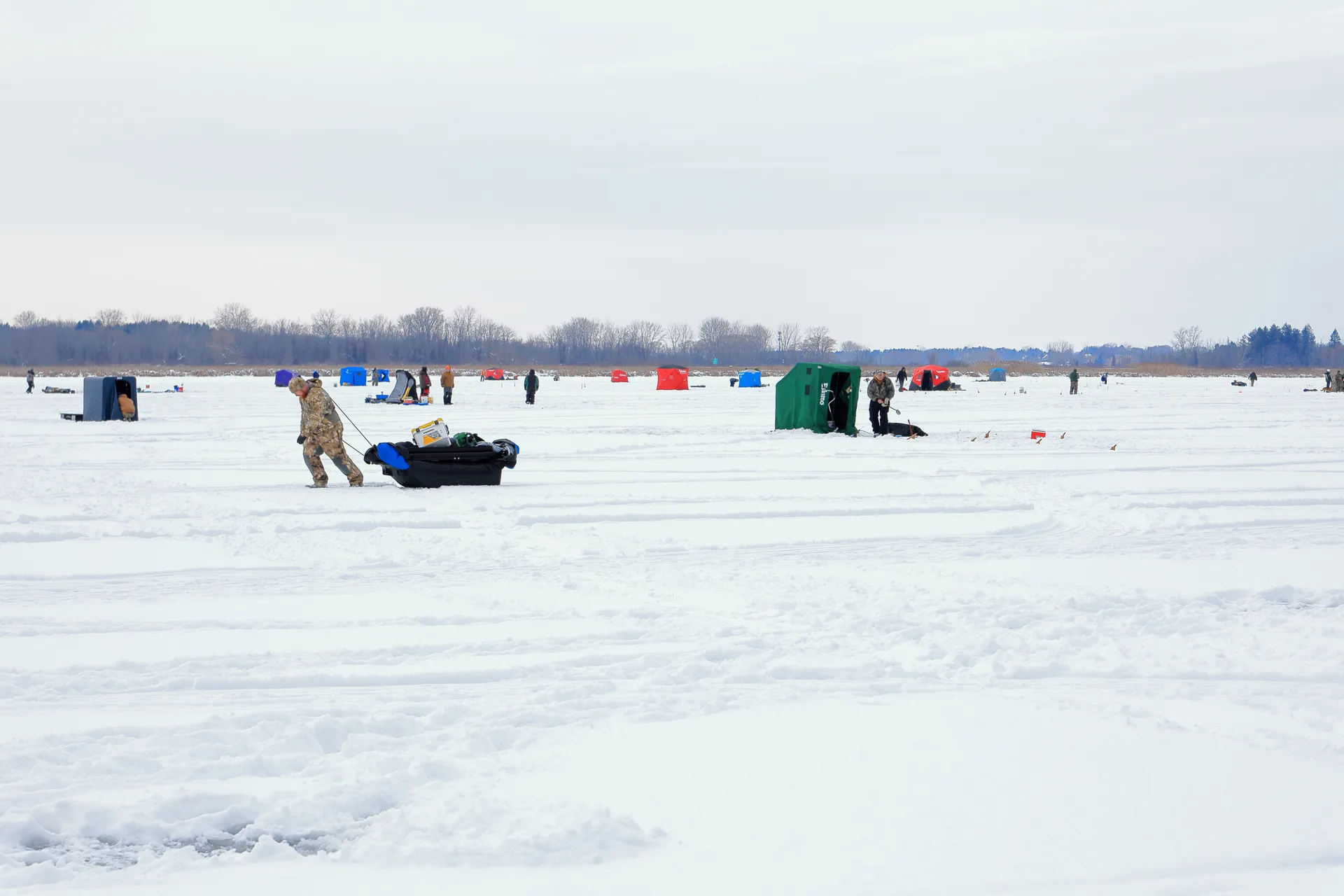
There is something deeply Canadian about sitting on a frozen lake, staring into a hole in the ice, and waiting for a fish to bite. Ice fishing near Blue Mountain is not just a winter activity — it is an experience that connects you to the landscape, the seasons, and a tradition that has been part of life in this region for centuries. And you do not need any prior experience to try it.
Georgian Bay and the surrounding inland waters offer excellent ice fishing opportunities from January through March, with guided outfitters who provide everything you need for a memorable first outing. Whether you are a complete beginner or an experienced angler looking for a new winter fishing destination, the Blue Mountain area has you covered — and it pairs perfectly with other cold-weather adventures like snowmobiling the OFSC trails or cross-country skiing and snowshoeing.
Where to Fish
Georgian Bay
Georgian Bay is the primary ice fishing destination near Blue Mountain, offering productive fishing when ice conditions are safe — typically from mid-January through early to mid-March, depending on the winter.
- Collingwood Harbour area — One of the most accessible locations, with relatively easy walk-on access and productive fishing for multiple species. The harbour's somewhat sheltered position often means more stable ice conditions than open bay areas.
- Nottawasaga Bay shoreline — The stretch of bay near the Nottawasaga River mouth attracts fish throughout the winter. This area is popular with local ice anglers and has a regular community of huts during peak season.
Inland Lakes
Several smaller lakes in the area provide more intimate ice fishing experiences:
- Pretty River reservoir — A smaller body of water that can offer good fishing in a quieter setting
- Beaver Valley lakes — Various small lakes south of Blue Mountain provide opportunities for trout and panfish
- Smaller regional lakes — Ask local bait shops for current recommendations, as conditions and productivity vary year to year
What You Will Catch
The waters near Blue Mountain support a diverse range of species that are active throughout the winter:
- Lake Trout — Georgian Bay is renowned for its Lake Trout fishing. These cold-water fish are active throughout winter and can grow to impressive sizes. They are typically found in deeper water, often 60 to 100 feet or more.
- Rainbow Trout — Available in both the bay and some inland lakes. Rainbow Trout are strong fighters that provide exciting action on light ice fishing tackle.
- Whitefish — Georgian Bay Whitefish are a prized catch, both for the fight and for the table. They are one of the finest-eating freshwater fish in Ontario.
- Perch — Yellow Perch are abundant, cooperative, and delicious. They are the ideal beginner's target because they bite willingly and school in large numbers.
- Pike — Northern Pike are aggressive predators that provide explosive strikes and hard fights. They are found in shallower water near weed beds and drop-offs.
Guided Experiences
For first-timers, a guided ice fishing trip is strongly recommended. It eliminates the equipment, knowledge, and safety barriers that make solo ice fishing daunting for beginners.
What a Guided Trip Includes
Most guided ice fishing outfitters near Blue Mountain provide:
- All fishing equipment (rods, reels, tackle, bait)
- A heated ice hut (you will be warm and comfortable)
- Ice auger and hole preparation
- Expert instruction on technique, bait presentation, and species identification
- Knowledge of current ice conditions and productive locations
- Fish cleaning and packaging if you catch your limit
Cost
Expect to pay approximately $150 to $250 per person for a half-day guided trip (4 to 5 hours). Full-day trips are also available, typically at a higher rate. Most outfitters require a minimum group size of two to four people. Prices generally include all equipment and bait.
Booking
Guided ice fishing trips should be booked in advance, especially on weekends during peak season (February). Contact outfitters directly — local bait and tackle shops in Collingwood can recommend reputable operators. Ask about cancellation policies, as trips are weather and ice-condition dependent.
Ice Safety
Ice safety is not optional. It is the single most important aspect of ice fishing, and it must be taken seriously every single time you go on the ice.
Minimum Safe Ice Thickness
- 4 inches (10 cm) — Safe for walking and ice fishing on foot
- 5 inches (12 cm) — Safe for a snowmobile or ATV
- 8 to 12 inches (20 to 30 cm) — Safe for a car or small truck
Essential Safety Rules
- Never go alone — Always fish with at least one partner. If something goes wrong, you need someone who can help or call for assistance.
- Tell someone your plans — Before heading onto the ice, tell someone who is not coming where you will be, what time you expect to return, and what to do if you do not check in.
- Check local ice conditions — Visit a local bait shop before heading out. They monitor conditions daily and will tell you honestly whether it is safe. Do not rely on the internet — ice conditions change rapidly and vary by location.
- Carry safety equipment — Ice picks (worn around your neck), a throw rope (at least 50 feet), and a personal floatation device should be with you every time.
- Watch for warning signs — Cracking sounds, water on the surface, slushy or honeycomb-textured ice, and pressure ridges are all indicators of potentially unsafe ice.
- Stay away from current — Ice near river mouths, inflows, and outflows is often thinner and weaker than ice in open areas.
When Guided Trips Are the Safest Option
If you are unfamiliar with local ice conditions, a guided trip is by far the safest way to experience ice fishing. Professional guides check ice conditions daily, know exactly where the safe areas are, and carry comprehensive safety equipment. The peace of mind alone is worth the cost.
Licensing Requirements
You need proper licensing to fish legally in Ontario, even for ice fishing.
What You Need — Ice Fishing Near Blue Mountain
- Ontario Outdoors Card — This is the base card required for all fishing and hunting activities in Ontario. Available online at ontario.ca/page/fishing.
- Fishing Licence — Purchased separately after obtaining the Outdoors Card.
Important Notes — Ice Fishing Near Blue Mountain
- Licences can be purchased online and printed at home
- You must carry your licence and Outdoors Card while fishing
- Catch limits vary by species and zone — the Blue Mountain area falls within Fisheries Management Zone 14 for inland lakes and Zone 16 for Georgian Bay
- Check the current Ontario Fishing Regulations Summary for specific limits and seasons
Equipment for Beginners
If you choose to fish on your own rather than booking a guided trip, here is the basic equipment you will need:
Fishing Gear
- Ice fishing rod — Shorter than standard rods (24 to 36 inches) and designed for the close-quarters jigging motion used in ice fishing
- Reel — A simple spinning reel spooled with 4 to 8 pound test line
- Tackle — Small jigs (1/16 to 1/4 ounce) in various colours, small spoons, and live bait (minnows or worms, available at local bait shops)
- Ice auger — Manual augers are affordable and adequate for a few holes. Power augers are faster but more expensive.
Comfort and Safety Gear
- Bucket or sled — To carry your gear onto the ice and serve as a seat
- Portable shelter — A pop-up ice fishing tent blocks wind and retains some heat. Not essential for short sessions but makes a big difference in comfort.
- Warm clothing — Dress in layers. You will be sitting still in cold temperatures for extended periods. Insulated boots, heavy gloves, a warm hat, and a windproof outer layer are essential. See our seasonal outfit guide for more on dressing for Blue Mountain winters.
- Hand and toe warmers — Disposable chemical warmers are inexpensive and effective
- Hot beverages in a thermos — Coffee, tea, or hot chocolate in an insulated thermos is essential for morale
Tips for a Great First Ice Fishing Experience
- Set realistic expectations — Ice fishing is as much about the experience as the catching. Some days the fish bite aggressively; other days they are quiet. Enjoy the silence, the landscape, and the company.
- Start with Perch — Perch are abundant, eager to bite, and forgiving of beginner mistakes. They are the perfect species for your first ice fishing outing.
- Keep moving — If you are not getting bites after 20 to 30 minutes, drill a new hole 15 to 20 feet away. Fish are mobile, and sometimes a small change in location makes a big difference.
- Watch your depth — Use a depth finder or simply lower your bait to the bottom, then reel up 6 to 12 inches. Most species feed near the bottom in winter.
- Bring friends — Ice fishing is a social activity. The conversation, the shared anticipation, and the group excitement when someone gets a bite are what make it memorable.
After Your Day on the Ice
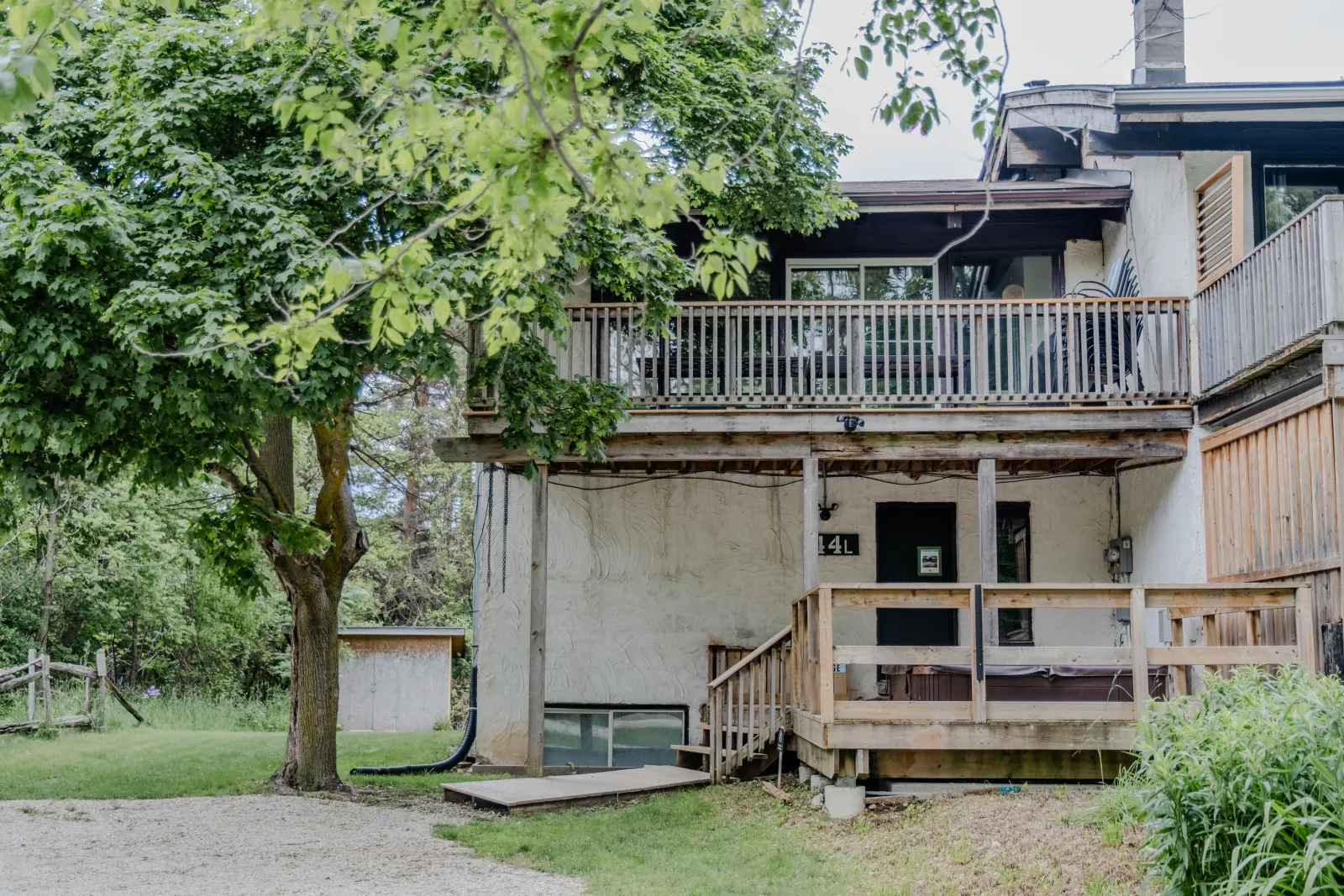
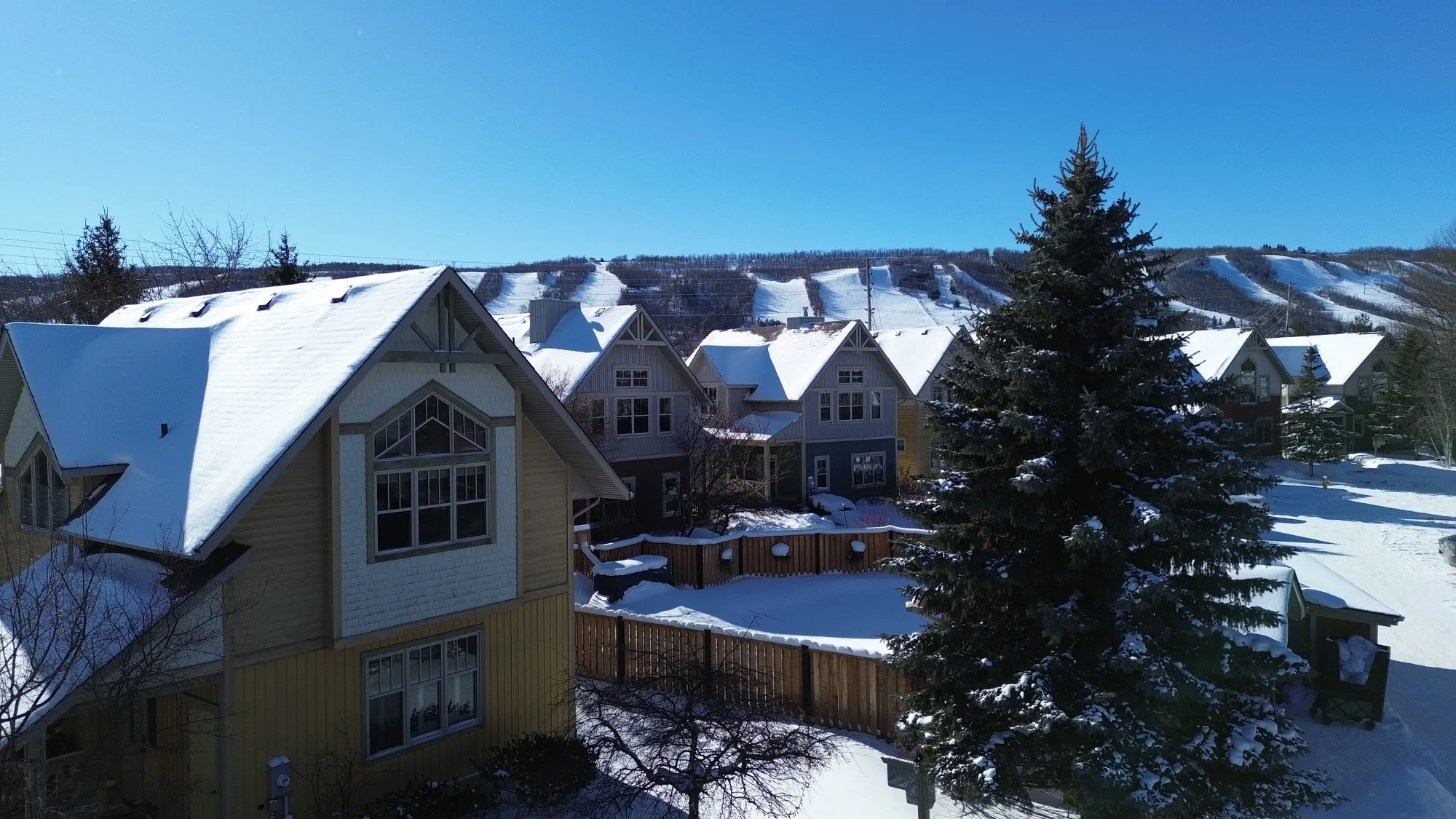
After a day of ice fishing near Blue Mountain, return to your Blue View Chalets property for the perfect contrast — a hot tub soak to warm your bones, a full kitchen to cook your fresh catch, and a crackling gas fireplace to gather around while you recount the day's adventures. Our luxury chalets sleep 10 to 14 guests, providing ample room for your fishing crew to spread out and relax. Book your winter stay at booking.blueviewchalets.com and add ice fishing to your Blue Mountain winter itinerary.
Or call us at (416) 203-2057