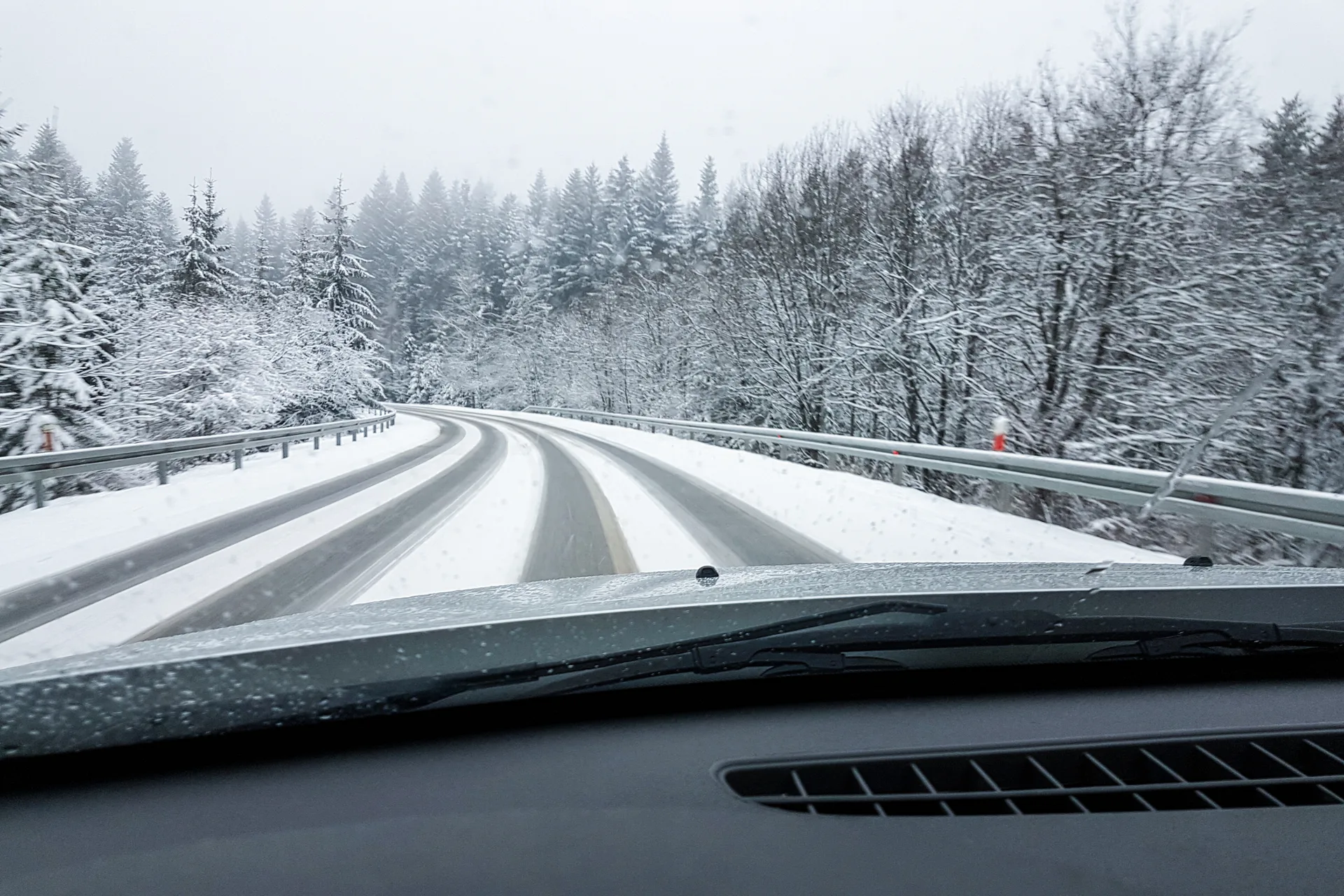
If you have driven to Blue Mountain in winter, you have likely experienced it: one moment the road is clear, the next you are in a wall of white with near-zero visibility. Georgian Bay snow squalls are a weather phenomenon that catches unprepared drivers off guard every winter. Understanding what they are and how to handle them makes the difference between a stressful drive and one that is simply part of the adventure.
What Are Snow Squalls
Snow squalls are a lake-effect snow phenomenon caused by cold Arctic air masses passing over the relatively warm, open waters of Georgian Bay. As the cold air absorbs moisture from the lake, it forms intense, narrow bands of snow that dump heavy accumulation over small areas in very short periods.
Key Characteristics
- Intensity: Snow squalls can dump 10 to 30 centimetres of snow in just 1 to 2 hours
- Visibility: They can reduce visibility to near zero within seconds
- Width: Squall bands are often just 5 to 10 kilometres wide, meaning you can drive from clear skies into a blizzard and back to clear skies in a matter of minutes
- Speed: They form and move quickly, making them difficult to predict with precision
- Localization: They are hyper-local — one area may be getting hammered while a town 20 kilometres away sees nothing
Not a Snowstorm
It is important to understand that snow squalls are not the same as a general snowstorm. A snowstorm is a large weather system that drops snow over a wide area for an extended period. A squall is sudden, intense, narrow, and fast-moving. The danger of squalls comes from their surprise factor and the extreme visibility reduction, not necessarily the total accumulation.
Where Snow Squalls Hit
The Snow Belt
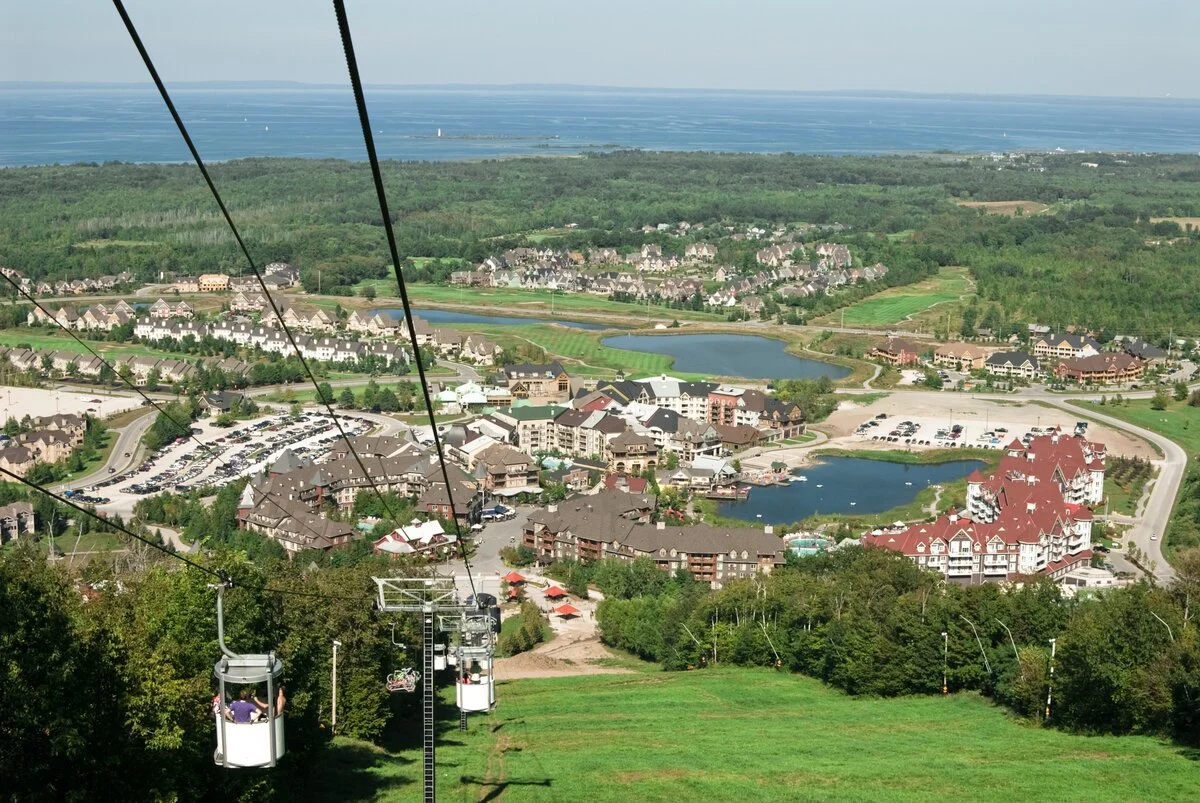
The snow belt runs along the southern shore of Georgian Bay. The areas most affected include Collingwood, Wasaga Beach, Stayner, Creemore, and the Blue Mountain area. Highway 26 between Stayner and Collingwood is the stretch most commonly impacted on the route from Toronto.
Why This Area Gets So Much Snow
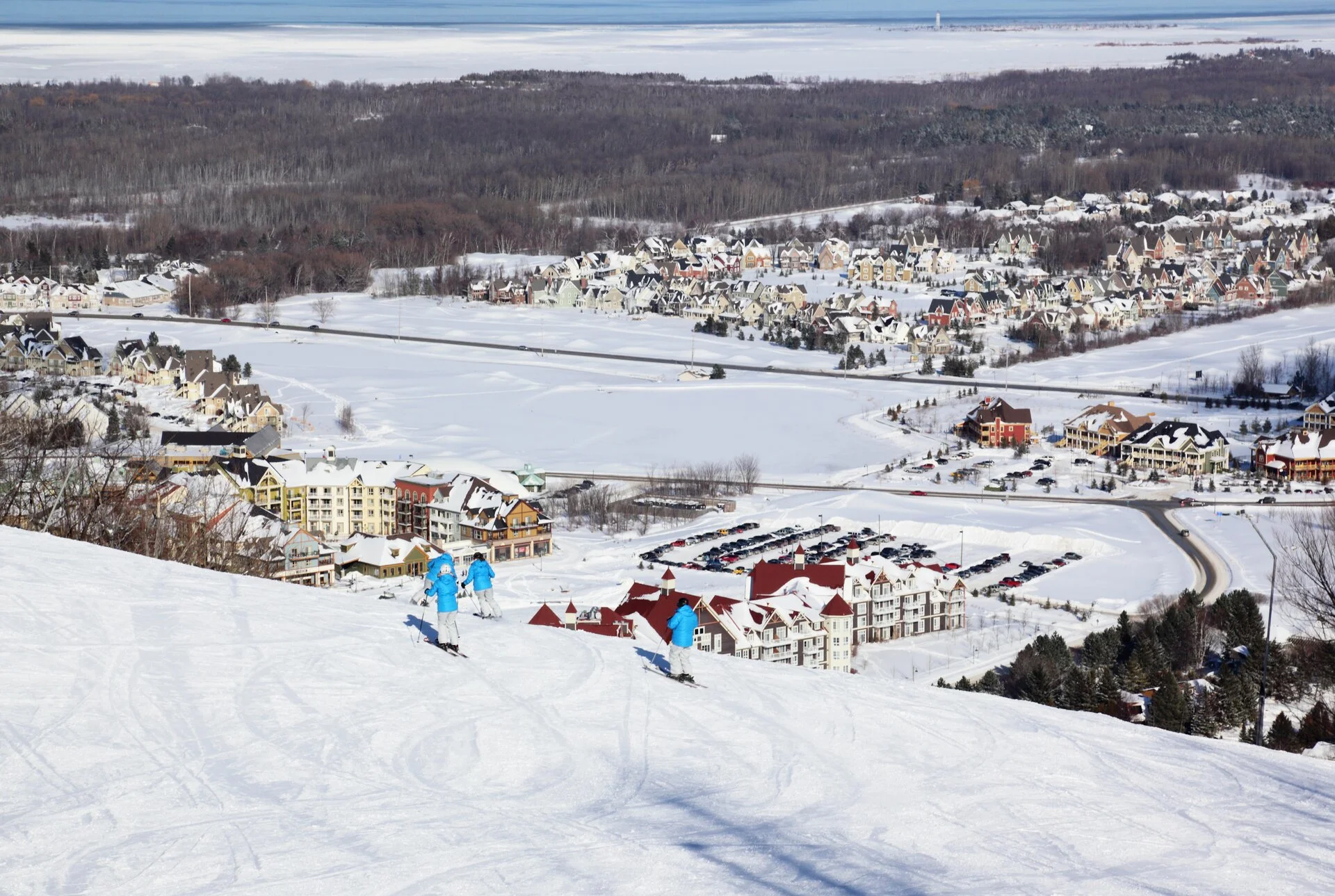
The Collingwood and Blue Mountain area receives an average of approximately 300 centimetres (118 inches) of snow per year. That is roughly double what Toronto gets. The reason is geography: cold northwest winds cross Georgian Bay, pick up moisture, and dump it as they hit the higher terrain of the Niagara Escarpment. Blue Mountain sits right in the crosshairs of this pattern, which is exactly why the skiing is so good.
When Snow Squalls Happen
Season
Snow squalls are most common from November through March, with the highest frequency in December and January. They are most likely to occur when Georgian Bay has not frozen over, because open water provides the moisture that fuels the squalls. In recent years, Georgian Bay has rarely frozen completely, which means squall season can extend well into March.
Time of Day
Squalls can occur at any time, but they are most frequent in the afternoon and evening. This is because daytime heating increases the temperature contrast between the lake water and the cold air above it, which intensifies the lake-effect process.
Conditions That Trigger Squalls
- Cold Arctic air moving from the northwest across Georgian Bay
- Open water on Georgian Bay (no ice cover)
- Strong winds perpendicular to the shoreline
- A significant temperature difference between the air and the water
How to Prepare
Before You Leave
- Check Ontario 511 at 511on.ca for real-time road conditions, closures, and travel advisories. Bookmark this site if you drive to Blue Mountain regularly
- Download the Ontario 511 app for push notifications about road conditions on your route
- Check Environment Canada weather radar — You can literally see the squall bands forming and moving on the radar map. If you see a band of heavy precipitation sitting over Highway 26, consider delaying your departure by 30 to 60 minutes
- Check the forecast for snow squall watches and warnings issued by Environment Canada
Winter Tires
Winter tires are not optional for this drive. Ontario law requires winter tires on Highway 400 series roads from December 1 to April 30, and you will be glad you have them on Highway 26 and the local roads near Blue Mountain. The difference between winter tires and all-season tires on snow-covered roads is dramatic — stopping distances can be reduced by up to 50 percent.
Emergency Kit for Your Car
Keep the following in your vehicle during winter trips:
- Blanket — A warm blanket in case you need to wait for help or are stuck for an extended period
- Water and snacks — Granola bars, nuts, or anything non-perishable
- Phone charger — A car charger or portable battery pack
- Small shovel — To dig out if you slide into a snowbank
- Extra washer fluid — Road spray from salt trucks will coat your windshield rapidly. You will go through washer fluid faster than you expect
- Flashlight — With extra batteries
- Ice scraper and snow brush — Clear all windows, mirrors, and lights before driving
Driving Tips During a Snow Squall
If You Are Caught in a Squall
- Slow down significantly — Your speed should match visibility. If you can only see 50 metres ahead, you should be going slow enough to stop in 50 metres
- Turn on headlights and hazard lights — Make yourself visible to other drivers. Use low beams, not high beams, as high beams reflect off the snow and reduce your visibility further
- Increase following distance dramatically — In normal conditions, two to three seconds of following distance is standard. In a squall, increase this to eight to ten seconds minimum
- Do not brake suddenly — Gentle, gradual braking reduces the risk of skidding. If your vehicle has ABS, apply firm, steady pressure and let the system work
- Stay in your lane — Do not attempt to pass other vehicles in low visibility conditions
- Pull over completely if visibility drops to zero — Find a safe spot off the road, keep your lights on, and wait. Squalls are often narrow and fast-moving, so it may pass in 10 to 20 minutes
The Most Important Rule
Do not try to push through. The temptation to maintain speed and "get through it" is strong, especially when you know squalls are narrow. Resist it. Multi-vehicle pileups on Highway 400 and Highway 26 happen every winter because drivers refuse to slow down in squalls. A squall band may be just 5 to 10 kilometres wide, so patience is all you need. Slow down, wait it out, and arrive safely.
Alternative Routes
Highway 400 to Highway 89 to Collingwood
The standard route from Toronto takes Highway 400 North to Highway 89 West and then Highway 26 West into Collingwood. Highway 89 runs more inland and tends to be less affected by lake-effect squalls than Highway 26.
Avoiding the Worst of Highway 26
If conditions are particularly bad on Highway 26, consider exiting Highway 400 at Highway 89 and heading west to Collingwood rather than continuing north to Highway 26 at Stayner. Highway 89 approaches Collingwood from the south and may avoid the worst squall bands that run parallel to the Georgian Bay shoreline.
Check Before Committing
Use the Environment Canada radar and Ontario 511 to check conditions before choosing your route. Sometimes Highway 26 is completely clear while Highway 89 has drifting. The location of the squall band determines which route is better on any given day.
The Silver Lining
Here is the thing about snow squalls: they are the reason Blue Mountain has incredible snow conditions. While Toronto skiers are stuck on man-made snow, Blue Mountain benefits from frequent, heavy natural snowfall that keeps the runs in excellent shape throughout the season. Those squalls that made your drive a bit more exciting are the same ones laying down fresh powder on the slopes.
The snow belt is a feature, not a bug. It is what makes Blue Mountain the best skiing in southern Ontario.
Arrive Safely, Ski Happily
The drive to Blue Mountain in winter requires respect for the weather, not fear of it. Prepare your vehicle, check conditions, leave early, and drive according to visibility. Snow squalls are dramatic but manageable with the right approach. Once you arrive at your chalet, the fireplace and hot tub will make you forget the drive entirely. Book your winter stay at Blue View Chalets and experience why the snow belt is the best thing about Blue Mountain.
Or call us at (416) 203-2057