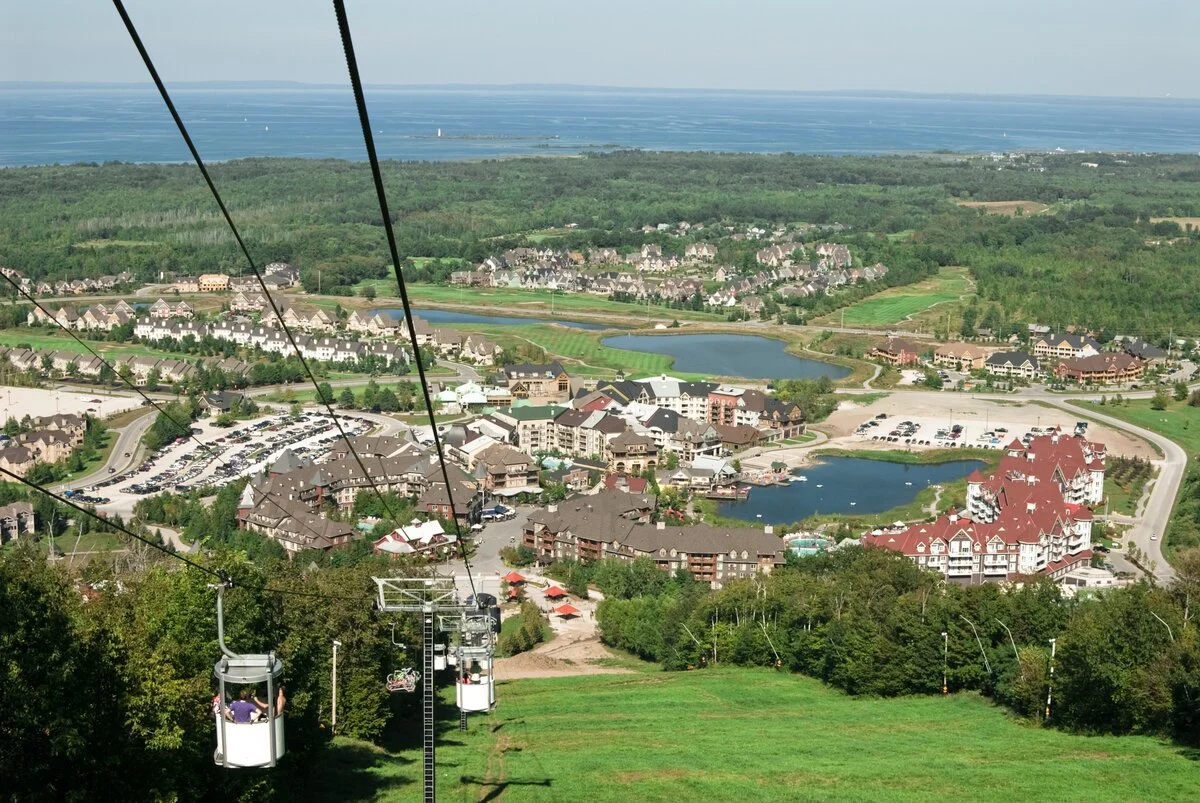
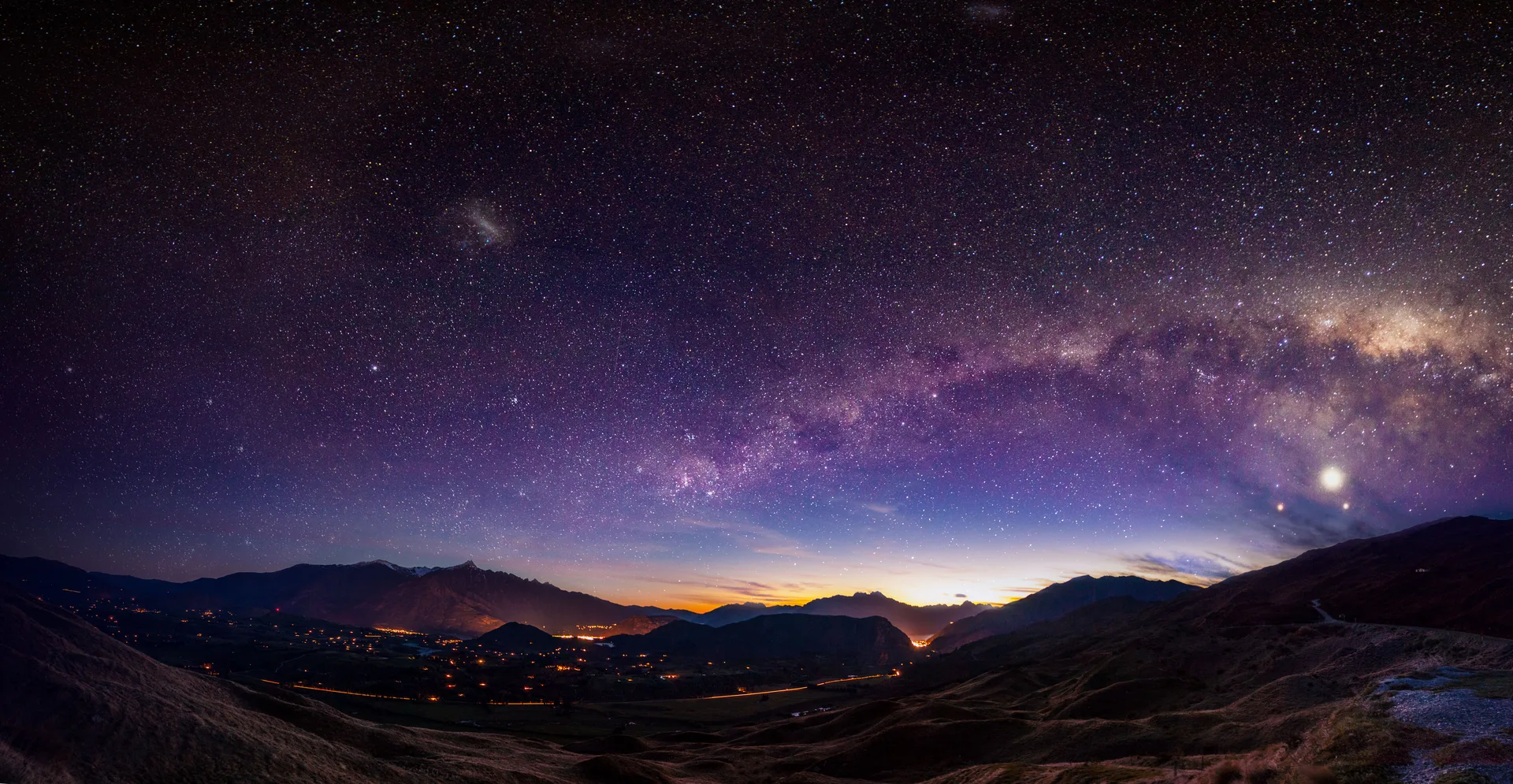
Blue Mountain is not typically marketed as a stargazing destination, and that is precisely why it works. While the resort village itself generates enough light to wash out the fainter stars, a 10 to 15 minute drive south into the surrounding countryside reveals surprisingly dark skies that most visitors never experience. The combination of rural farmland, minimal development, and the dark expanse of Georgian Bay to the north creates conditions that are genuinely impressive for a location less than two hours from Toronto.
Whether you are a seasoned astronomer or someone who simply wants to see the Milky Way with your own eyes, the Blue Mountain area offers accessible and rewarding stargazing with very little effort.
Best Stargazing Locations
County Road 91 Towards Creemore
This is the top recommendation from local stargazers. Once you pass through Duntroon heading south towards the village of Creemore, the light pollution drops significantly. The farmland is flat and open, providing unobstructed horizons in most directions. Pull off at any safe sideroad intersection — the wide gravel shoulders provide ample parking. On a clear, moonless night, the Milky Way is visible to the naked eye from this area.
Craigleith Provincial Park Shoreline
The shoreline at Craigleith faces north over Georgian Bay, and because there is nothing but open water to the north, light pollution from that direction is essentially zero. This makes Craigleith an excellent location for watching the Northern Lights during geomagnetic storms. The park is just five minutes from most Blue View Chalets properties, making it the most convenient dark sky option. Access the shoreline and find a spot away from any street lighting.
Pretty River Valley Provincial Park — Stargazing & Dark Sky Viewing Near Blue Mountain, Ontario
The forested setting of Pretty River Valley blocks ambient light from surrounding areas, creating a pocket of relative darkness. Access is more limited than other options, and the forest canopy restricts your view of the horizon, but the overhead sky can be impressively dark. This is a better option for experienced stargazers who know what they are looking for in a smaller patch of sky.
South of Collingwood Towards Singhampton
The farmland south of Collingwood in the direction of Duntroon and Singhampton offers some of the darkest skies in the immediate area. The terrain is gently rolling, and the absence of development means very little artificial light. Several quiet sideroads in this area provide safe pull-off locations for an evening of observation.
What to See: Season by Season
Year-Round Northern Constellations
These constellations are visible every clear night from the Blue Mountain area:
- Ursa Major (the Big Dipper) — The most recognizable constellation in the northern sky. Use the two pointer stars to find Polaris.
- Polaris (the North Star) — Located almost directly above true north. Follow the pointer stars from the Big Dipper's cup.
- Cassiopeia — A distinctive W-shaped constellation that circles Polaris opposite the Big Dipper.
- Ursa Minor (the Little Dipper) — Fainter than Ursa Major but findable once you locate Polaris at its tail.
Summer Sky (June through August)
Summer is the prime season for stargazing near Blue Mountain. The nights are warm, the Milky Way is at its brightest, and the sky does not fully darken until after 10:00 PM, making it a natural late-evening activity.
- The Milky Way — Look south between 11:00 PM and 2:00 AM for the brightest section of our galaxy. From the dark locations listed above, you can see the galactic core rising above the southern horizon — a band of hazy light studded with dark dust lanes.
- Summer Triangle — Three bright stars (Vega, Deneb, and Altair) form a prominent triangle high overhead.
- Scorpius and Sagittarius — Low on the southern horizon, these constellations frame the galactic centre.
Winter Sky (December through February)
Winter stargazing requires warm clothing and determination, but the rewards are significant. Winter skies are typically clearer than summer skies, and the longer nights provide more viewing time.
- Orion — The dominant winter constellation. The three belt stars are unmistakable, and the Orion Nebula (visible as a fuzzy patch below the belt) is stunning through binoculars.
- Sirius — The brightest star in the night sky, located below and left of Orion. Its intense, twinkling light is visible even under moderate light pollution.
- The Winter Hexagon — Six bright stars forming a large hexagonal shape that dominates the winter sky.
Meteor Showers
Mark your calendar for these annual meteor showers:
- Perseids (August 11-13) — The best meteor shower of the year. Expect 50 to 100 meteors per hour under ideal conditions. Warm summer nights make this the most comfortable shower to watch.
- Geminids (December 13-14) — Nearly as prolific as the Perseids but much colder. Dress in full winter gear and bring a sleeping bag to lie on.
- Lyrids (April 22-23) — A moderate shower with 15 to 20 meteors per hour. Spring nights are cool but manageable.
- Eta Aquarids (May 5-6) — Best viewed in the predawn hours. A moderate shower that peaks around 20 to 30 meteors per hour.
Northern Lights (Aurora Borealis)
The Northern Lights are not a regular occurrence at Blue Mountain's latitude, but they are possible and occasionally spectacular. During strong geomagnetic storms with a Kp index of 5 or higher, aurora can be visible looking north over Georgian Bay.
Best Viewing Conditions
The Georgian Bay coastline is ideal for aurora viewing because there is no light pollution to the north — just open water and dark sky. Craigleith Provincial Park and the shoreline areas west of Collingwood are the best local spots.
How to Know When to Look
- Check the Space Weather Prediction Center (swpc.noaa.gov) for geomagnetic storm forecasts
- Follow aurora alert services and apps that send notifications when activity is elevated
- Strong solar storms are more common during solar maximum periods (the current solar cycle is in an active phase)
- Look north starting around 10:00 PM on nights with elevated forecasts
When the aurora does appear this far south, it typically manifests as a green or reddish glow on the northern horizon, occasionally with visible rays or curtains of light. Cameras often capture more colour than the naked eye can see.
Equipment and Preparation
What You Need — Stargazing & Dark Sky Viewing Near Blue Mountain, Ontario
The good news is that you do not need a telescope or any expensive equipment for rewarding stargazing near Blue Mountain. Here is what to bring:
- A blanket or reclining chair — You will be looking up for extended periods. Lying on a blanket is far more comfortable than craning your neck.
- A red flashlight — White light destroys your night vision, which takes 20 to 30 minutes to fully develop. A red flashlight (or a regular flashlight covered with red cellophane) preserves your dark adaptation.
- Warm clothing — Even in summer, standing still outside at night gets cold quickly. In winter, dress as if the temperature is 10 degrees colder than the forecast, because you will not be moving to generate heat.
- Binoculars — A pair of 7x50 or 10x50 binoculars reveals vastly more detail than the naked eye. You can see the Orion Nebula, star clusters, and lunar craters with basic binoculars.
- A stargazing app — Sky Guide, Stellarium, and Star Walk are all excellent. Point your phone at the sky and the app identifies what you are seeing. Use the app's night mode (red screen) to preserve your night vision.
Photography Settings
If you want to photograph the Milky Way or Northern Lights (for more on capturing the region, see our Blue Mountain photography weekend guide):
- Aperture: f/2.8 or wider (the wider the better)
- ISO: 3,200 to 6,400 (adjust based on light pollution and desired noise level)
- Shutter speed: 15 to 25 seconds (longer exposures will show star trails due to Earth's rotation)
- A sturdy tripod is essential — there is no way to handhold a 20-second exposure
- Turn off image stabilization when using a tripod, as it can introduce blur
- Use a remote shutter or 2-second timer to avoid camera shake when pressing the shutter button
Stargazing from Your Chalet
Some Blue View Chalets properties have decks with partial sky views that are suitable for casual observation. While the light pollution from the nearby village means you will not see the Milky Way from your deck, you can still enjoy bright constellations, planets, and the moon — especially with binoculars. Pairing a few minutes of deck stargazing with a soak in your private chalet hot tub is a quintessential Blue Mountain evening experience.
For the best viewing, plan a 10 to 15 minute drive to one of the darker locations listed above. The effort is minimal and the reward is significant.
Plan Your Stargazing Trip
Blue View Chalets provides the ideal base for combining outdoor adventure with dark sky exploration. Spend your days skiing, hiking, or working through our summer activities guide, then head out after dinner to some of the darkest skies within two hours of Toronto. Our chalets offer full kitchens for preparing a late-night thermos of hot chocolate, hot tubs for warming up after an evening under the stars, and the comfort of a luxury home to return to when the sky clouds over. Book your stay at booking.blueviewchalets.com and add stargazing to your Blue Mountain itinerary.
Or call us at (416) 203-2057