
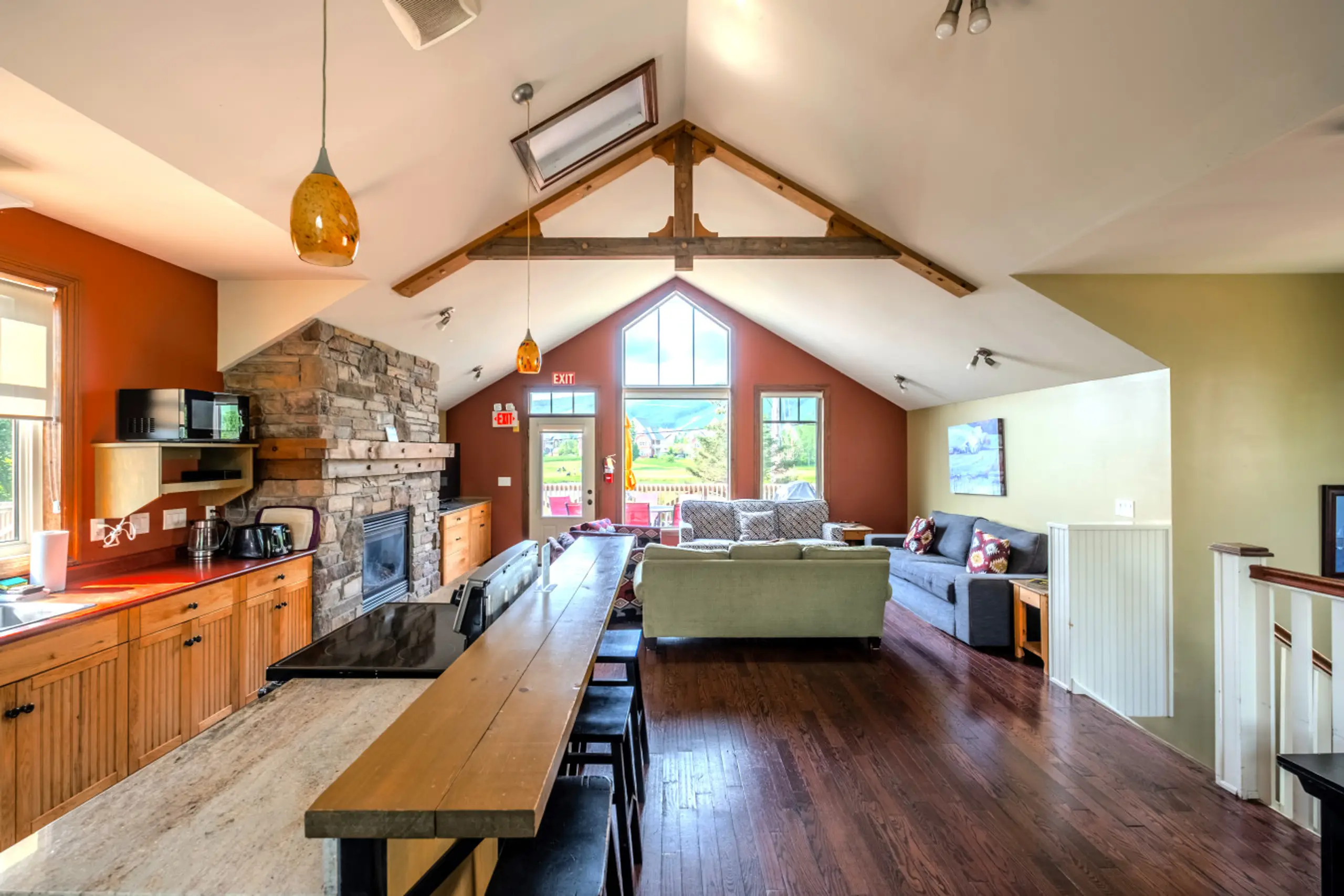
A family reunion week at Blue Mountain works best when it has a few shared anchors and several periods that households control themselves. Use arrival day to settle rooms, one evening for family stories and one carefully planned meal for the main gathering. Book the actual bedroom and kitchen arrangement your family needs, then use this suggested seven-day sequence to coordinate the stay.
Day one gives every household a clear place to land
Assign rooms before arrival and send each household its chalet name, confirmed dates and relevant instructions. At the Mountain cluster, eight chalets share the property while retaining their own kitchens and living spaces. The arrangement can suit a reunion whose households want separate routines, but the reservations and occupancy limits remain individual.
Choose one contact for each chalet so questions do not all reach the same relative. The published check-in is 4:00 pm. Plan an easy first meal within each booked home, then arrange a short greeting once people are settled. The objective is to reconnect without requiring a tired driver to start a complicated cooking shift.
The reunion planning guide covers the earlier organising decisions. This week plan begins once the date and accommodation are agreed. Start from two adjacent chalets, or larger group configurations when the headcount requires them.
Day two establishes the reunion’s shared rhythm
Use the first full morning to agree which gatherings matter most and which activities are optional. Ask each generation to name one thing it would enjoy. Combine compatible requests and leave the rest as small-group options, rather than trying to create a single schedule that satisfies every age.
Make the meal arrangement explicit. Several cluster chalets list dining for ten, while sleeping capacities are higher. Multiple booked chalets provide multiple kitchens; they do not establish a dining venue for the whole extended family inside one home. Speak with the team about the gathering plan and keep each property within its permitted occupancy.
For the rest of this day, suggest a short activity people can join or leave easily. Confirm any external venue directly. End with a brief check of the following day’s drivers, meals and start times, so the organiser does not spend the next morning answering the same question across several households.
Day three lets branches of the family make separate plans
Give households a day to follow their own interests. A family with young children can preserve nap times; cousins can choose a different outing; grandparents can spend a quiet morning at their own pace. The shared event is simply a check-in later in the day, within the arrangements that work for the booked chalets.
Each subgroup should carry its own confirmation details and know when it expects to return. Avoid leaving one adult at the chalet as an assumed supervisor for anyone who changes plans. If the family wants coordinated childcare, agree the people and responsibilities clearly among yourselves.
The family collection helps with accommodation choices for different household needs. Individual room records such as Aurora’s clarify bed sharing and levels, which remain relevant when relatives exchange rooms during a longer visit.
Day four makes space for stories rather than another reservation
Use the middle of the week for a low-preparation family-history activity. Ask each household to bring a few photographs, a short story or a question for an older relative. Keep the session voluntary and short enough that people can participate without committing the entire afternoon.
Get permission before recording anyone or posting photographs. Give younger family members a useful role such as labelling pictures or writing down names, while allowing others to listen. A reunion can produce a small shared memory collection without turning every guest into the subject of an interview.
Keep supplies simple: personal devices, chargers, paper and items the family brings. Wi-Fi and a Smart TV are listed, but no projector, presentation kit or specialist scanning equipment is promised. If a particular connection or device is essential, confirm it before making the activity depend on it.
Day five hosts the main meal within the real kitchen limits
Choose one meal as the reunion’s centrepiece and organise it around the documented dining and occupancy arrangement. Assign the menu before shopping. Give each household a defined contribution and name the person checking that ingredients and cooking equipment will be available.
Use the separate kitchens where your booking provides them, and serve in sittings if needed. Do not assume an oven can handle an unfamiliar oversized tray or that a dining count matches the overnight maximum. The meal plan for twenty is a related organising resource, with multiple-chalet capacity still governing the stay.
Make the cleanup assignment as clear as the cooking assignment. Someone should manage leftovers, another dishes, and each household should take responsibility for the serving items it brought. The relative who planned the reunion should be able to sit down during the main meal.
Day six leaves room for the request nobody planned in advance
Keep the last full day partly open for something the family discovered it wanted to do. That could mean repeating a favourite outing, spending time with a relative who arrived late or taking a group photo. Decide together after checking the relevant availability instead of adding another obligation weeks ahead.
Begin the practical departure conversation this evening. Identify the first cars to leave and assign their households tasks they can complete before going. Pack food into labelled bags, return personal items to their owners and settle which car carries any shared supplies. Leave only the final breakfast and room checks for departure day.
Day seven closes the reunion without leaving work to one family
Finish the chalet tasks before the 11:00 am check-out. The guest guide asks guests to remove food, clean dishes and counters, return furniture to place and put used towels in the shower or bath. Every household can check its own rooms for clothing, chargers and small belongings.
Choose one final point of contact per chalet to report any issue to the property manager. That person should not inherit everyone else’s packing and cleaning. A short thank-you message after departure can collect favourite memories and let people report an item that may have travelled in the wrong car.
Questions about fitting a reunion into a full week
Does the whole family need the same daily schedule?
No. Keep a few agreed gatherings and allow separate household plans between them. Confirm supervision and transport for each smaller group.
Can our largest chalet become the reunion’s dining hall?
Do not assume that. Check occupancy and dining arrangements with the team, and use the kitchens and seating associated with each booked chalet appropriately.
Where can we check several chalets for the same reunion week?
Review group accommodation options, confirm the bedroom allocation, then check matching reservation dates or contact the team about the required combination.
For a separate outdoor reunion venue, Bayview Park’s pavilion planner explains the Town inquiry that should come before invitations.
For a beach picnic with reserved cover, the Christie Beach pavilion guide explains the agreement and confirmation steps.
Or call us at (416) 203-2057