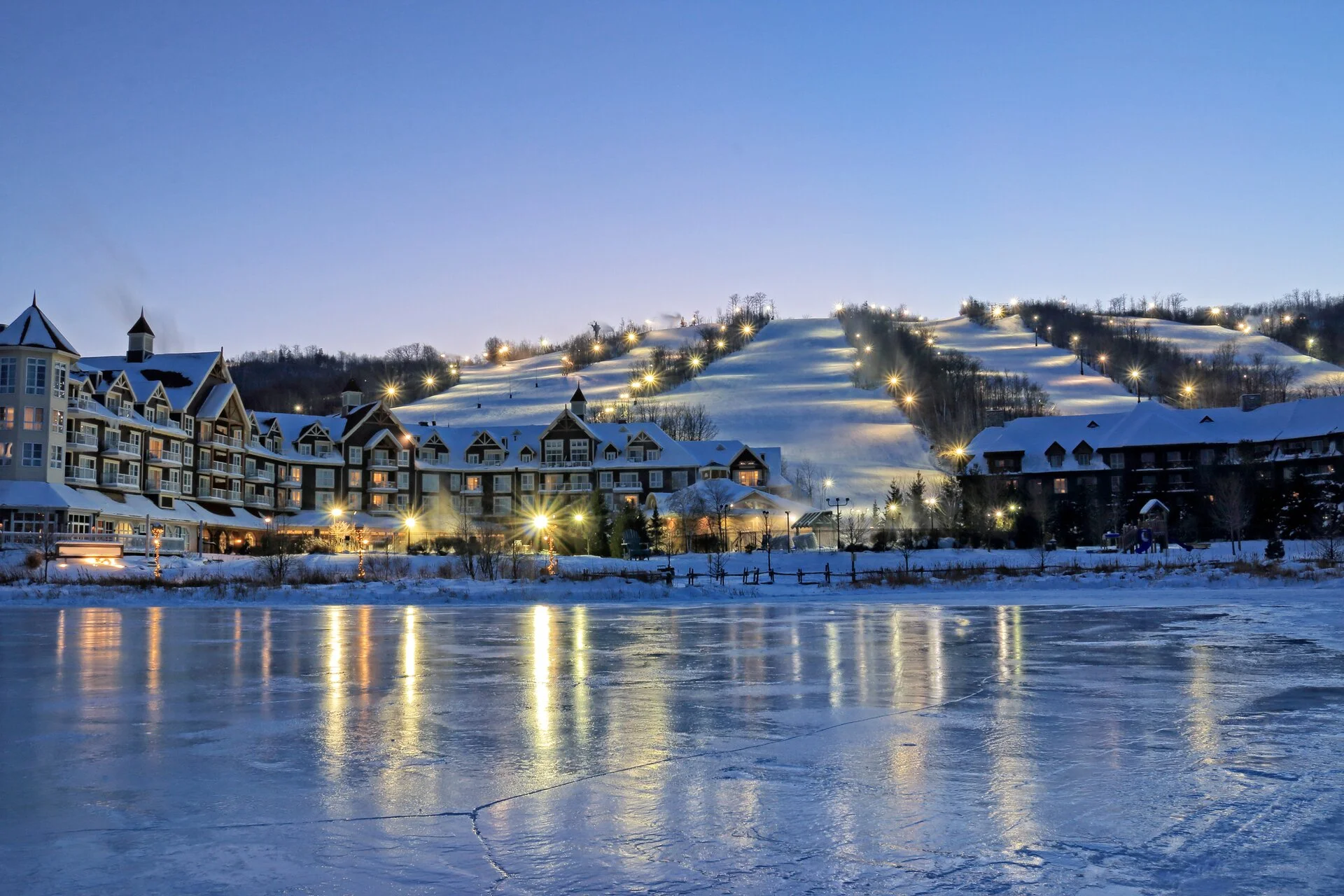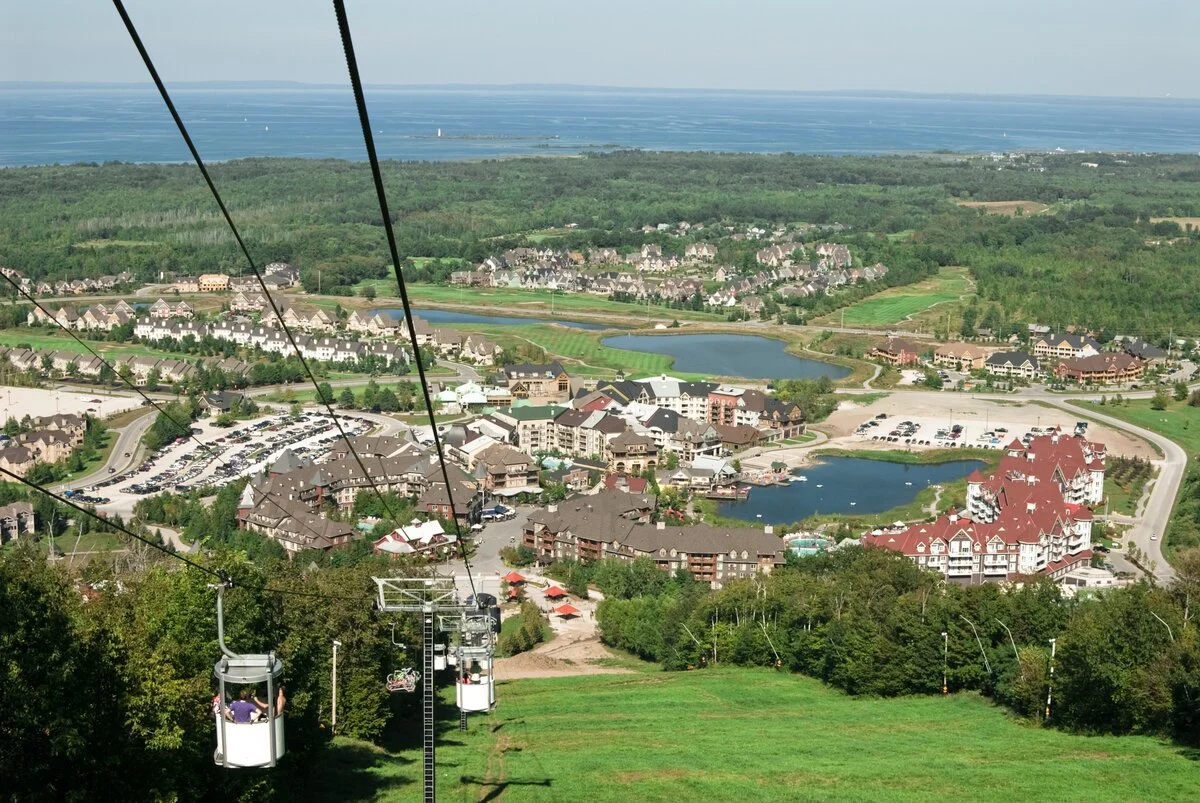

The same escarpment that makes this area good for skiing makes it punishing and popular for endurance sport. Long climbs, quiet concession roads, and trail networks with real vertical draw cyclists and runners here every season, and several established events bring hundreds of athletes and their families into town for a weekend at a time.
If you are racing — or supporting someone who is — the accommodation question has a specific answer, because race weekends have requirements a normal getaway does not: a 5 a.m. breakfast, somewhere to put a bike, and somewhere to recover afterwards.
The events that fill the calendar
Centurion Cycling Blue Mountain is the big one. Based at Blue Mountain Village, it runs as a three-day weekend built around set-distance road events — a 25-mile ride, a 50-mile race, and the 100-mile C100 — plus a time trial, a kids' race, a community ride, and a multi-stage competition combining several of them. The event's founding idea was that experienced racers and first-timers could share the same weekend, which is exactly why families come along: there is a distance for the strong rider and a distance for everyone else.
The Collingwood Half Marathon and 10K is the area's established road-running event, with courses certified by Athletics Canada. The half marathon starts along Collingwood's main street and heads out into the rolling countryside toward the escarpment, and it has a reputation as a fast course. Its autumn timing means participants get the fall colours as a bonus.
Blue Bully Ultra is the trail-running counterpart — a three-day stage race at Blue Mountain Resort, most recently scheduled for late September, where entrants can take on a single day or the full multi-day combination. Trail stage racing is a different discipline from road running, and this one uses the terrain the resort has rather than trying to hide from it.
Beyond these, the local running club organizes a calendar of smaller races through the year, and the area hosts multisport and charity events seasonally. Dates and formats shift annually, so confirm the current edition with the organizer before you book anything — and check our events calendar for what else is happening the same weekend.
Why race weekends outgrow hotel rooms
Watch what a race morning actually requires and the accommodation problem explains itself.
Breakfast happens at an hour no restaurant is open. A 7 a.m. gun means eating at 5. In a hotel that means whatever you stashed in your bag the night before; in a chalet it means someone makes oatmeal and coffee for everyone in a real kitchen. For a group riding the C100, this is not a small detail — it is the difference between a fuelled start and a hungry one.
Bikes and gear need somewhere to live. Road bikes do not belong in a hotel corridor, and a group of six riders arrives with six of them plus wheels, trainers, and tool kits. A whole house with a garage, a mudroom, and free parking for four vehicles absorbs that without anyone negotiating.
Recovery is part of the event. After 160 kilometres or a stage race day, a private hot tub is not a luxury add-on — it is the thing everyone talks about at dinner. Every one of our chalets has one, running year-round.
Support crews are families. The partner and kids who came along are not racing at dawn. They want a comfortable base, a kitchen, and something to do while the athlete is out — which the Village and the beaches provide, as our summer activities guide covers.
How groups organize it
The pattern that works, repeated across most race weekends we host:
- Book early and book the whole weekend. Race weekends are among the most predictable accommodation crunches of the year, because everyone entered wants the same nights. Registration opening is the signal to sort lodging.
- Match the chalet to the crew. A single chalet sleeping 10 to 14 covers most club groups — browse the summer chalets for warm-season events. Bigger contingents split across two adjacent chalets so early risers and late sleepers are not in the same building.
- Assign the kitchen. One person handles the pre-race dinner (early and carbohydrate-heavy), another handles race-morning breakfast, and everyone eats out afterwards to celebrate. Our group meal plan is built for exactly this kind of scheduling.
- Plan the logistics the night before. Kit laid out, bikes checked, drop-off and parking sorted, and an agreed meeting point for spectators. Village-based events mean the walk from our Mountain cluster is about ten minutes, which removes the race-morning parking problem entirely.
- Leave Sunday loose. Nobody wants an itinerary after a hard effort. A late checkout, a slow breakfast, and the hot tub is the correct plan.
Teams, clubs, and family blocks
Club trips and team weekends run on the same logic as any large group booking: everyone stays on one property, splits the cost, and eats together. The eight chalets in our Mountain cluster sit side by side, so a club can take two or three and keep the whole contingent in one place — see chalets for groups of 20 or more or the groups page for how combinations are arranged.
One honest note on location: the Mountain cluster is a ten-minute walk from Blue Mountain Village, which is where the resort-based events start and finish. For Collingwood road races, it is a short drive rather than a walk — plan a driver, or use the drive as your warm-up if you are riding.
Whatever the event, the useful mental model is that a race weekend is a group trip with an early alarm. Everything that makes a chalet work for a family reunion — the kitchen, the space, the fact that everyone is under one roof — is what makes it work at 5 a.m. on race morning too.
For Blue Bully Ultra Trail Race, Blue Mountain Ontario, the dedicated visitor listing separates the verified programme from future dates that still need an announcement.
For a Thanksgiving running trip, check the Thornbury Turkey Trot dates and stay details before coordinating the accompanying households.
A team preparing for 24h Blue MTN needs overnight rooms and rest arrangements that follow the relay programme.
The Meaford Harbour 5K Run/Walk needs a plan for different finishing paces as well as the current start instructions before race-morning transport is fixed.
For the Creemore Vertical Challenge, choose accommodation nights after checking the entered distance’s start and collection times.
The Summit 700 accommodation guide uses the announced July 10, 2027 date while keeping the new course and transport instructions separate from last year’s timetable.
Athletes considering the Wasaga Beach Triathlon and Duathlon need their own distance and wave instructions before setting the chalet household’s departure time.
A short stay for the CORR trail-running series needs one selected event date and its actual host venue; the club changes locations through the season.
Hockey weekends fill the same way; the Silver Stick and Huronia tournament itinerary plans a team's Friday-to-Sunday from a chalet base.
The obstacle weekend has its own event page: Spartan Race at Blue Mountain.
Or call us at (416) 203-2057